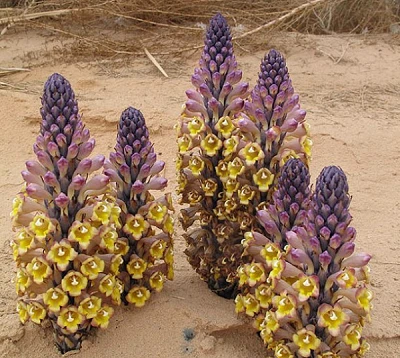
Cistanche is a unique desert plant with a long history in traditional herbal medicine. It is often called "desert ginseng" because of its traditional value and its ability to survive in harsh environments.
Today, Cistanche is attracting interest from researchers and supplement brands. Scientists have studied its phenylethanoid glycosides, polysaccharides, iridoids, and other natural compounds.
As a cistanche raw material manufacturer, in this comprehensive guide, we will break down everything you need to know about Cistanche-from where it grows and how different species compare, to its key active ingredients and what recent research reveals.
What Is Cistanche?
Cistanche is a genus of parasitic desert plants belonging to the Orobanchaceae family. Because it lacks chlorophyll, Cistanche cannot produce its own energy through photosynthesis. Instead, it survives by attaching its roots to host plants, absorbing essential nutrients and water directly from them.
For centuries, Cistanche stem extracts have been prized in Asian wellness traditions as a powerful tonic. It is traditionally classified as an adaptogen-a natural substance believed to help the body adapt to stress and restore physical balance.
Where Does Cistanche Grow and What Makes It Unique?
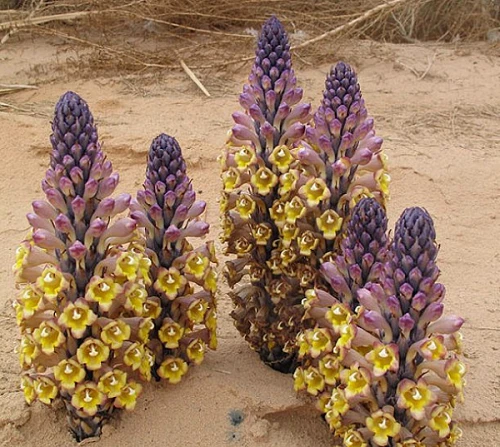
Cistanche thrives in some of the world's harshest environments, primarily across arid deserts and dry grasslands in Northwest China, Mongolia, and parts of Central Asia.
What makes Cistanche truly unique is its survival strategy:
- Parasitic Nature: It relies on drought-tolerant host plants like Tamarix (saltcedar) or Haloxylon ammodendron (saxaul) to thrive in dry, nutrient-poor soil.
- Resilience: The harsh climatic conditions-extreme heat, severe cold, and low rainfall-force the plant to synthesize rich concentrations of protective phytochemicals.
Cistanche Tubulosa vs. Cistanche Deserticola: What Is the Difference?
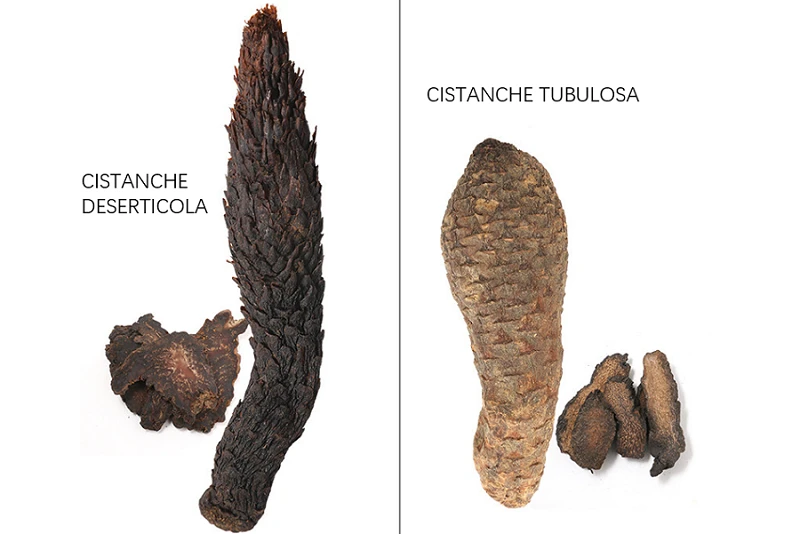
These two species are the most common commercial sources. They share many traits but differ in key ways.
| Feature | Cistanche tubulosa | Cistanche deserticola |
| Primary Host Plant | Tamarix species | Haloxylon ammodendron |
| Natural Habitat | Taklamakan Desert (Xinjiang, China) | Alashan Desert (Inner Mongolia, China) |
| Active Compound Profile | Higher in echinacoside and acteoside | Higher in cistanoside A and polysaccharides |
| Common Modern Application | Cognitive support, stamina, and standardize extracts | Energy balance, kidney/gut health, traditional decoctions |
Both species offer valuable properties, but Cistanche tubulosa is frequently favored in modern research and standardized dietary supplements due to its potent concentration of specific phenylethanoid glycosides.
What Are the Traditional Uses of Cistanche?
Cistanche has a long history in traditional Chinese herbal medicine.
Traditional applications have included support for vitality, physical weakness, and general tonic use. Traditional sources also describe its use for reproductive health, bowel function, and strengthening the body.
Cistanche deserticola has traditionally been used as a tonic in China and Japan. Historical applications have focused on concepts such as supporting kidney and liver functions within traditional medicine systems.
Cistanche tubulosa has also been used traditionally for conditions involving weakness, reproductive health, lower back discomfort, and circulation.
What Are the Key Active Compounds in Cistanche?
The potential wellness benefits of Cistanche come from its diverse bioactive constituent profile:
1. Phenylethanoid Glycosides (PhGs): Phenylethanoid glycosides (PhGs), are among the most studied compounds in Cistanche. Including Echinacoside, Acteoside, Cistanoside A, Cistanoside C, Tubuloside, and Other related glycosides.
2. Polysaccharides: Complex carbohydrates that support immune system function and gut health.
3. Iridoids and Lignans: Plant compounds that contribute to anti-inflammatory activity.
4. Trace Minerals and Alkaloids: Nutrients that support overall physical health and cellular metabolism.
Echinacoside and Acteoside: Why Are These Compounds Important?
Among all the bioactive constituents found in Cistanche, Echinacoside and Acteoside (also known as verbascoside) stand out as the two most researched phenylethanoid glycosides.
- Echinacoside: This compound acts as a powerful antioxidant that helps defend cells against oxidative damage. Research suggests it plays a critical role in supporting cognitive function, memory performance, and vascular health.
- Acteoside: Known for its strong anti-inflammatory properties, Acteoside works alongside Echinacoside to help protect nerve cells, support cellular longevity, and manage daily exercise-induced stress.
What Does Current Research Say About Cistanche?
Modern scientific investigations into Cistanche have grown significantly over the past two decades. Preliminary preclinical studies and laboratory research point to several promising areas:
- Cognitive and Brain Support: Laboratory studies indicate that Cistanche extracts may help protect neurons from oxidative stress, encouraging nerve growth factors and supporting brain plasticity and memory retention.
- Anti-Aging and Cellular Defense: By neutralizing free radicals, the antioxidant compounds in Cistanche help slow cellular oxidation, promoting overall longevity.
- Immune System Regulation: Cistanche polysaccharides have been shown to stimulate immune cell activity, helping the body maintain balanced defense systems.
- Physical Endurance and Energy: Research in animal models suggests Cistanche can lower metabolic fatigue markers and improve muscular endurance by enhancing cellular energy production (ATP synthesis).
Human clinical evidence remains more limited for many specific claims. This means Cistanche should be viewed as an active area of botanical research, rather than a proven treatment for specific medical conditions.
Research is also moving toward understanding how Cistanche compounds work together. Recent reviews have examined the potential multi-target effects of phenylethanoid glycosides. Researchers have discussed pathways such as NF-κB, MAPK, PI3K/Akt, and Nrf2/HO-1.

Choose a Reliable Cistanche Extract Supplier
Because the demand for Cistanche has increased, choosing a reputable supplier is vital for safety, effectiveness, and sustainability.
When evaluating Cistanche extracts or Cistanche powder suppliers, look for:
- Content Testing: Ensure the product undergoes third-party lab testing to verify active compound levels (e.g., standardized percentage of Echinacoside and Acteoside).
- Purity and Safety: Confirm that products are tested for heavy metals, pesticides, microbial contaminants, and artificial additives.
- Sustainable Sourcing: Look for suppliers committed to eco-friendly harvesting practices, as wild desert plant habitats need protection against over-harvesting.
- Certifications: Prioritize manufacturers operating in certified ISO, KOSHER, HALAL, and FSSC22000.
Undersun is a professional cistanche manufacturer with bulk and wholesale supply. We provide Cistanche deserticola and Cistanche tubulosa extracts and powders. Every lot ships with a cistanche COA, TDS, SDS, and specification sheet.
Looking for a dependable cistanche extract supplier or a competitive cistanche quote? Contact us today for a free sample and a tailored offer.
FAQ
Is cistanche the same as ashwagandha?
No. Cistanche is a desert parasitic herb, while ashwagandha is a root from India. They have different compounds and traditions.
Which species is better, tubulosa or deserticola?
It depends on your goal. Tubulosa is often richer in echinacoside and acteoside. Deserticola is traditional and higher in polysaccharides.
Is cistanche safe as a daily food?
In China, desert cistanche is approved as a food-medicine substance. Still, follow local rules and suggested serving sizes.
How should I store cistanche powder?
Keep it in a sealed container away from light and moisture. A cool, dry place helps preserve the active compounds.
Can I take cistanche and tongkat ali together?
Many people stack them, but talk to a doctor first. Both may affect hormones and energy. Start low and watch how you feel.
Can you take cistanche and ashwagandha together?
Yes, they are often paired for stress and vitality. They work in different ways. Still, check with a healthcare provider before mixing herbs.
Can you take cistanche at night?
Yes, you can take it at night. It is not strongly stimulating for most people. Some prefer morning, so test what fits your routine.
How does cistanche deserticola taste compared to truffles?
Cistanche is earthy and slightly sweet, not like a rich truffle. It is mild and woody. Most buyers use it in extracts, not for flavor.
References
Zhou S, Duan H, Jiang Y, Yan W. Analysis of the active ingredients and health applications of cistanche. Frontiers in Nutrition. 2023.
Fan L, Peng Y, Chen X, Ma P, Li X. Integrated analysis of phytochemical composition, pharmacokinetics, and network pharmacology to probe distinctions between the stems of Cistanche deserticola and C. tubulosa based on antidepressant activity. Food & Function. 2022.
Pharmacopoeia of the People's Republic of China (2020 Edition). Volume I: Cistanche (Rou Cong Rong) monograph. Beijing: China Medical Science Press.
Convention on International Trade in Endangered Species of Wild Fauna and Flora (CITES). Appendices I, II and III. Geneva: CITES Secretariat.
Bioactive Components, Pharmacological Properties, and Applications of Cistanche deserticola Y. C. Ma: A Comprehensive Review. Nutrients. 2025.
Cai H, et al. Production of acteoside from Cistanche tubulosa by beta-glucosidase. Pakistan Journal of Pharmaceutical Sciences. 2011.