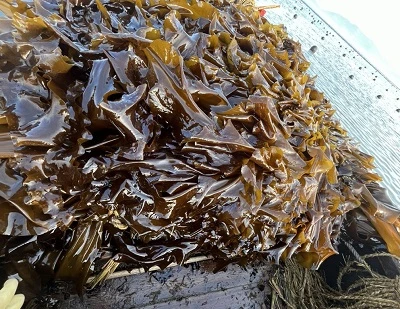
The demand for marine-derived cosmetic ingredients has increased rapidly as skincare brands look for natural, sustainable, and scientifically supported solutions. Among these ingredients, red algae extract has attracted significant attention due to its rich profile of bioactive compounds, including polysaccharides, amino acids, antioxidants, peptides, and marine-specific molecules.
Derived from red algae species such as Porphyridium cruentum, Porphyridium purpureum, Chondrus crispus, and other Rhodophyta species, red algae extract is widely used in premium skincare formulations targeting hydration, anti-aging, skin protection, and barrier improvement. Its unique ability to survive in harsh marine environments makes it a valuable source of protective compounds that can benefit human skin.
What Is Red Algae Extract? Understanding Its Origin
Red algae extract is a botanical marine ingredient obtained from red algae, a group of photosynthetic organisms belonging to the phylum Rhodophyta. Unlike terrestrial plants, red algae grow in marine environments exposed to sunlight, salinity changes, and oxidative stress. To survive under these conditions, they naturally produce protective molecules with strong biological activity.
Among cosmetic applications, Porphyridium cruentum and Porphyridium purpureum are considered valuable sources of high-performance active ingredients because they produce extracellular polysaccharides (EPS), pigments, and antioxidant compounds.
Key Compounds in Red Algae Extract
The cosmetic value of red algae extract comes from its diverse bioactive composition. Different compounds provide complementary skin benefits.
- Mycosporine-Like Amino Acids (MAAs): Natural UV-filtering secondary metabolites.
- Sulfated Polysaccharides (Carrageenans & Galactans): Macromolecules with exceptional film-forming and moisture-binding abilities.
- Carotenoids (Astaxanthin & Phycoerythrin): Potent lipophilic and hydrophilic antioxidants.
- Polyphenols & Phlorotannins: Free-radical scavengers that mitigate oxidative damage.
- Marine Peptides & Essential Amino Acids: Building blocks that support structural proteins and cellular repair.
Together, these compounds make red algae extract a versatile ingredient for advanced skincare formulations.

Nature's UV Shield: The Sun-Protective Power of Mycosporine-Like Amino Acids
One of red algae's most significant contributions to skin health is its production of Mycosporine-Like Amino Acids (MAAs). These water-soluble molecules absorb solar radiation across both UVA and UVB spectrums-with peak absorption precisely in the damaging UVA range-and dissipate that energy safely as harmless heat without generating reactive oxygen species (ROS).
Unlike synthetic chemical UV filters that can degrade or irritate sensitive skin, MAAs act as a biological photo-shield. They preserve cellular DNA, minimize photo-aging, and protect dermal lipids from oxidation, making red algae an indispensable natural booster for your daily sun-protection formulations.
Although red algae extract is not a replacement for sunscreen filters, MAAs can support daily skincare products designed for environmental protection. They are especially attractive in formulations focused on:
- Urban pollution defense
- Daily antioxidant protection
- Photoaging prevention
- Skin resilience
Locking in Hydration: How Red Algae Polysaccharides Outperform Traditional Humectants
Dehydration accelerates skin aging and impairs the repair of the skin barrier. Red algae are rich in sulfated polysaccharides, such as carrageenans, which possess a remarkable affinity for water molecules. These polysaccharides form a flexible, breathable, and ultra-thin film on the skin's surface. This structural network offers a dual benefit:
- Water Retention: It traps ambient moisture directly against the stratum corneum.
- Barrier Shielding: It significantly reduces Transepidermal Water Loss (TEWL), ensuring long-lasting, deep-tier hydration even in dry environments.
This makes them valuable for formulations designed for dry, sensitive, or dehydrated skin. Key hydration benefits include:
- Improving skin moisture retention
- Enhancing skin softness and smoothness
- Supporting a healthy moisture barrier
- Providing a lightweight sensory feel
Because of these properties, red algae extract is commonly used in hydrating serums, facial masks, moisturizers, and barrier-repair products.
Shielding Against Free Radicals: The Antioxidant Mechanism of Astaxanthin and Polyphenols
Environmental factors such as UV radiation, pollution, and oxidative stress accelerate skin aging, leading to visible signs of aging. Antioxidants found in red algae-such as astaxanthin and natural polyphenols-help protect the skin from free radical damage.
Often referred to as the "King of Carotenoids," astaxanthin possesses a free radical-neutralizing capacity 6,000 times greater than that of Vitamin C. It spans the entire cell membrane, neutralizing free radicals both within the cell and in the extracellular matrix, thereby preventing lipid peroxidation and premature skin aging.
Polyphenolic compounds also help combat oxidative stress by scavenging reactive oxygen species (ROS).

Calming the Storm: Anti-Inflammatory Compounds and Skin Barrier Repair
Chronic inflammation breaks down skin structure and exacerbates conditions like rosacea, eczema, and acne. Bioactive compounds in red algae actively inhibit pro-inflammatory cytokines and suppress inflammatory gene expression.
By suppressing key inflammatory pathways, red algae extract calms cutaneous redness, soothes reactive skin, and accelerates the natural wound-healing process. Furthermore, its mineral-rich profile strengthens intercellular lipids, helping a damaged skin barrier rebuild its structural integrity.
Boosting Collagen Synthesis: Marine Peptides and Skin Elasticity
As skin ages, natural collagen and elastin production tapers off. Red algae yield bioactive marine peptides that act as cellular signal messengers. Upon absorption, these low-molecular-weight peptides stimulate dermal fibroblasts-the primary cells responsible for synthesizing collagen and extracellular matrix components.
Simultaneously, the high concentration of trace elements (such as zinc, magnesium, and calcium) present in red algae serves as essential cofactors for enzymatic repair. The net result is improved skin elasticity, reduced depth of fine lines, and a firmer, plumper dermal architecture.
Clinical Evidence: What the Research Says About Marine Botanicals
Laboratory and cosmetic ingredient studies have demonstrated that red algae-derived molecules can contribute to hydration improvement, oxidative stress defense, and skin conditioning effects. Dermatological interest in marine botanicals is backed by substantial scientific literature:
- Photoprotection & DNA Integrity: In vitro and in vivo studies published in Marine Drugs confirm that formulations rich in red algae MAAs significantly decrease UVA-induced skin cell damage and prevent lipid oxidation.
- Hydration Metrics: Clinical trials evaluating sulfated galactans demonstrate up to a 24-hour sustained increase in skin hydration after a single application, alongside a measurable decrease in TEWL.
- Anti-Aging Efficacy: Human clinical trials show that topical application of red algae extract over 8 to 12 weeks yields statistically significant improvements in skin roughness, wrinkle volume, and overall elasticity.
From Ocean to Bottle: Extraction Technologies and Bioavailability
The efficacy of red algae in a bottle depends heavily on processing methods. Traditional high-heat extraction can denature delicate peptides and destroy heat-sensitive antioxidants like astaxanthin. Modern cosmeceutical formulation relies on advanced green extraction techniques:
| Extraction Method | Key Advantage | Impact on Bioavailability |
| Enzymatic Hydrolysis | Breaks down heavy proteins into micro-peptides | Enhances deep-skin penetration |
| Supercritical CO2 Extraction | Solvent-free, low-temperature isolation | Preserves fragile lipophilic antioxidants |
| Cold-Press Micro-Filtration | Retains full-spectrum trace minerals & MAAs | Maintains natural bioactivity intact |
Through these gentle biotechnology practices, red algae compounds maintain high bioavailability, allowing them to penetrate deep into the epidermal layers and deliver targeted skin health benefits.
Looking for a Reliable Red Algae Extract Supplier?
Searching for Red Algae Extract Powder for skincare formulations? We provide cosmetic-grade red algae extract with professional quality control and flexible bulk supply options for brands, formulators, and distributors.
Get in touch with our team to receive product specifications, testing documents, and a customized quotation.
References
Schmid, D., Schürch, C., & Zülli, F. Mycosporine-like Amino Acids from Red Algae Protect against Premature Skin-Aging. ResearchGate & Semantic Scholar.
De la Coba, F., et al. Mycosporine-Like Amino Acids from Red Macroalgae: UV-Photoprotectors with Potential Cosmeceutical Applications. MDPI (Applied Sciences, 2021).
Davinelli, S., et al. Astaxanthin in Skin Health, Repair, and Disease: A Comprehensive Review. PMC (Nutrients, 2018).
Sariharyanti, et al. The Potential of Astaxanthin as a Natural Compound for Decelerating Skin Aging: An Update Review. (Journal of Advanced Pharmaceutical Technology, 2024/2026).
Pangestuti, R., et al. Marine Algal Sulfated Polysaccharides for Cosmeceutical Applications. MDPI (Marine Drugs).