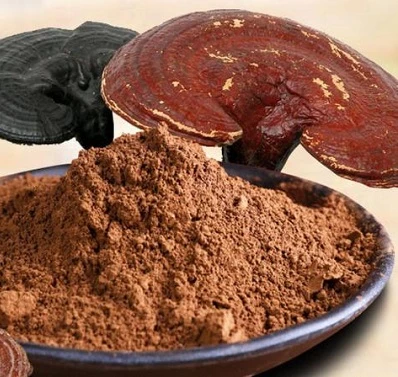
In the expanding functional mushroom market, Ganoderma lucidum-commonly known as Reishi-remains a cornerstone ingredient for dietary supplements, functional beverages, and nutraceutical formulations. For B2B buyers, procurement managers, and formulators, navigating product specifications can be challenging. A common point of confusion centers on the difference between Reishi raw mushroom powder and standard Reishi mushroom extract.
Understanding the distinctions in production, physical-chemical indicators, quality verification, and testing methodologies is essential for raw material sourcing, regulatory compliance, and consistent product formulation.
What is Reishi Mushroom: Types and Uses
Reishi (Ganoderma species), known as Lingzhi in Traditional Chinese Medicine (TCM), is a polypore fungus characterized by its distinct caps and rich profile of bioactive compounds. It contains over 400 bioactive constituents, most notably water-soluble polysaccharides (specifically beta-glucans) and alcohol-soluble triterpenoids (such as ganoderic acids).

Reishi Species Classification & Medicinal Profile
There are many varieties of Reishi, with red Reishi(Ganoderma lucidum) being the type most extensively used commercially. The Ganoderma genus encompasses various species that differ in color, sensory characteristics, and traditional or medicinal uses.
| Color / Flavor Profile | Species Name | Common Name | Primary Medicinal Applications & Benefits |
| Black / Salty | Ganoderma neojaponicum | Imazeki / Black Reishi |
Improves lung function, holds ethnopharmacological potential, and exhibits cytotoxic properties. |
| White / Pungent-Hot | Ganoderma applanatum | Bear's Bread / Artist's Conk |
Protects kidney function; offers anti-aging benefits through anti-tyrosinase, anti-collagenase, and anti-elastase activities. |
| Red / Bitter | Ganoderma lucidum | Lingzhi / Red Reishi |
Acidic substances target internal organs; enhances cognitive performance and memory function. |
| Yellow / Sweet | Ganoderma corteaui | Jin Lingzhi / Golden Reishi |
Strengthens spleen function and digestive health. |
| Purple / Sweet | Ganoderma sinense | Zizhi |
Enhances eye and joint function; aids in improving skin complexion. |
Reishi Mushroom Applications
- Dietary Supplements: Encapsulated powders, tablets, and softgels targeted toward stress management, sleep support, and immune health.
- Functional Beverages: Soluble extracts formulated into mushroom coffees, tea blends, and wellness shots.
- Nutraceuticals & Cosmetics: Anti-aging skincare serums and adaptogenic wellness blends taking advantage of Reishi's antioxidant, anti-tyrosinase, and anti-collagenase properties.
It is worth noting that the commonly used forms of Reishi mushroom include the fruiting body, mycelium, and spore powder. For the differences between the fruiting body and mycelium, please read this article: Reishi Mushroom Benefits: Fruiting Body vs. Mycelium and Extract Forms Explained
What Are Reishi Powder and Reishi Mushroom Extract?
Although both ingredients come from reishi mushrooms, their production methods and chemical profiles can differ significantly.
Reishi Powder (Straight Powder / Whole Mushroom Powder)
Reishi mushroom powder is produced by harvesting and drying Reishi fruiting bodies and mechanically grinding them into a fine powder, typically with a mesh size of 80–120.
- Key Characteristic: Contains the full spectrum of the mushroom matrix, including dense chitin cell walls and insoluble fiber.
- Limitation: Human digestive systems lack the chitinase enzyme required to break down fungal chitin efficiently. Consequently, raw bioactive compounds remain largely locked within the cell matrix, resulting in lower bioavailability.
Reishi Mushroom Extract
Reishi extract undergoes a extraction process (using hot water, ethanol, or a combination of both) designed to break down chitin and isolate active constituents. The resulting liquid is concentrated and spray-dried into a soluble powder.
- Hot-Water Extraction: Concentrates water-soluble β-glucans and polysaccharides.
- Ethanol (Alcohol) Extraction: Solubilizes fat-soluble triterpenes (ganoderic acids) responsible for Reishi's signature bitter taste and therapeutic activity.
- Dual Extraction (Water + Alcohol): Yields a full-spectrum extract containing optimized levels of both polysaccharides and triterpenes.

Reishi Powder vs. Extract: Key Differences in Specification, Testing, and Physical and Chemical Indicators
For product formulators and B2B buyers, choosing between raw Reishi powder and processed Reishi extract involves evaluating key parameters across active constituent levels, testing standards, and physical-chemical specifications.
The following are the specifications and physicochemical parameters for Undersun's Reishi mushroom powder and Reishi mushroom extract.
1. Raw Specifications & Key Bioactive Markers
The primary distinction between raw mushroom powder and concentrated extracts lies in the concentration of bioactive compounds:
- Reishi Raw Powder: Raw Reishi powder (including conventional fine powder and organic fine powder) contains baseline naturally occurring active compounds. Typically testing at Polysaccharides ≥0.7% and Triterpenic Acids ≥0.3% according to USP-NF standards. Moisture levels are maintained at ≤17.0%, with ash content ≤4.0%.
- Ethanol Extract: Concentrated via alcohol extraction, this spec guarantees high levels of beta-glucans (≥40.0%) and Total Polysaccharides (≥ 40.0%), with Triterpenic Acids ≥0.3% and a significantly reduced moisture content of ≤7.0%.
- Dual Extract (Ethanol + Hot Water Extract): Utilizing both ethanol and water solvents yields maximum triterpenoid potency. Formulated to meet high-tier standards like DSLD, undersun's reishi extract guarantees Triterpenic Acids ≥ 6.0% (under USP/DSLD methods), beta-glucans ≥ 35.0%, Total Polysaccharides ≥20.0%, and moisture ≤7.0%
.
2. Product Identification & Authenticity Methods
To ensure product integrity, combat market adulteration, and verify mushroom authenticity, distinct identification methods are applied based on product processing levels:
- Microscopic Identification: Used for raw powders to verify cellular structures, basidiospores, and hyphae characteristic of genuine Ganoderma lucidum.
- Thin-Layer Chromatography: Essential for both raw powders and extracts. TLC compares chemical fingerprints against official reference standards to confirm species authenticity and active marker presence.
- Excipient Identification: Crucial for raw powders and dual extracts to verify the absence of undeclared carriers, starches, or extraneous additives.
3. Physical-Chemical & Analytical Testing Overview
The table below summarizes undersun's reishi mushroom powder and extract specifications, identification testing requirements, and regulatory quality compliance indicators:
| Product Category | Product Specification | Identification Items | Physical-Chemical Indicators & Regulatory Basis |
| Reishi Powder |
Fine Powder |
Microscopic identification, Thin-layer chromatography, Excipient identification |
• Moisture ≤17.0%
• Ash ≤4.0%
• Polysaccharides ≥0.7%
• Triterpenic Acid ≥0.3% (USP-NF) |
| Organic Reishi Powder |
Fine Powder |
Microscopic identification, Thin-layer chromatography, Excipient identification |
• Moisture ≤ 17.0%
• Ash ≤ 4.0%
• Polysaccharides ≥ 0.7%
• Triterpenic Acid ≥ 0.3% (USP-NF) |
| Reishi Extract (Passed ID - Ethanol Extract) | β-Glucan ≥ 40.0% | Thin-layer chromatography |
• Polysaccharides ≥ 40.0%
• β-Glucan ≥ 40.0%
• Triterpenic acids ≥ 0.3%
• Moisture ≤ 7.0% |
| Reishi Extract (Ethanol + Water Extract) | β-Glucan ≥ 35.0% | Thin-layer chromatography, Excipient identification |
• Polysaccharides ≥ 20.0%
• β-Glucan ≥ 35.0% (DSLD)
• Triterpenic Acid ≥ 6.0% (USP & DSLD)
• Moisture ≤ 7.0% (USP-NF) |
4. Key Testing Methodologies
- Polysaccharide vs. β-Glucan Assay: Traditional UV-Vis spectrophotometry measuring total polysaccharides can be skewed by added starches or dextrin fillers. Modern B2B standards utilize specific enzymatic assays to accurately quantify fungal beta-glucans while identifying starch interference.
- Triterpene HPLC Quantification: While general spectrophotometry estimates total triterpene content, High-Performance Liquid Chromatography (HPLC) is required by standards like USP to explicitly isolate and measure specific ganoderic acids (such as Ganoderic Acid A and B).
Reishi Mushroom Extract: Passed ID
In raw material procurement, confirming authentic Ganoderma lucidum identity and preventing species substitution or adulteration is a critical quality assurance step. An ingredient lot designated as "Passed ID" has verified its chemical fingerprint against an authenticated reference standard.
Key Identification Methods for "Passed ID"
- Thin-Layer Chromatography (TLC / HPTLC): High-Performance TLC provides a chromatographic chemical fingerprint of the extract. Comparing sample band profiles against an official reference standard confirms species authenticity and verifies that key triterpenoid markers are present.
- HPLC Chromatographic Fingerprinting: HPLC testing confirms specific peak profiles unique to Ganoderma lucidum, distinguishing it from related species or artificially spiked raw materials.
- DNA Barcoding / PCR Identification: Used primarily on raw incoming biomass prior to extraction to verify botanical identity at the genetic level (Ganoderma lucidum vs. Ganoderma applanatum or other species).
A standard Certificate of Analysis (CoA) for a premium Reishi extract should include HPTLC or HPLC identification test results explicitly stating "Positive / Conforms for Ganoderma lucidum."
The following images show the chromatograms for Undersun's Reishi mushroom extract.


How to Choose a Reliable Reishi Powder and Extract Manufacturer
When selecting a supplier of Reishi mushroom extract raw materials, you need to evaluate production standards, analysis transparency, and supply chain integrity.
Essential Evaluation Criteria
- Cultivation Control & Substrate Transparency: Inquire whether the manufacturer utilizes Duanwood (log-grown) fruiting bodies or sawdust-grown substrates. Log-grown Reishi fruiting bodies generally yield higher triterpene levels than mycelium grown on grain (MOG).
- Standardized Active Ingredients: Look for manufacturers capable of offering customized, standardized specifications.
- Third-Party Testing & Traceability: A reliable supplier provides batch-specific CoAs from ISO 17025 accredited laboratories. Testing should cover active markers alongside heavy metals (Pb, As, Cd, Hg), pesticide residues, microbiology, and mycotoxins.
- Certifications & Compliance: Ensure the supplier holds relevant quality management certifications, including cGMP, ISO 22000, FSSC 22000, USDA Organic, EU Organic, Halal, and Kosher.
- Process Consistency & Solubility: Request sample batches to test bulk density, flowability, moisture content, and cold-water solubility for beverage formulations.
Looking for A Reliable Bulk Reishi Powder and Extract Maufacturer?
Partner with a trusted, certified manufacturer for your functional mushroom formulations. We offer organic-certified, Duanwood-grown Reishi powders and dual-extracted standardized powders complete with full HPTLC species identification, Megazyme β-glucan verification, and third-party CoAs.
Contact our technical sales team today to request product specifications, sample kits, or custom quote options for your next production run!
References
Chen, L., & Zhang, H. (2022). Quantitative analysis of ganoderic acids and polysaccharides in Ganoderma lucidum extracts using HPLC and enzymatic assays. Journal of Agricultural and Food Chemistry, 70(14), 4321-4330.
World Health Organization. (2021). WHO Monographs on Selected Medicinal Plants: Quality Control Methods for Medicinal Plant Materials. World Health Organization Guidelines.
United States Pharmacopeial Convention. (2023). USP-NF Botanical Extracts Monograph: Reishi Mushroom Fruiting Body Powder and Extract Standards. USP Dietary Supplements Compendium.
Wu, D., & Wang, X. (2020). Differentiation of whole mushroom powders versus extracted functional ingredients: Bioavailability, chitin breakdown, and marker stability. Phytochemical Analysis, 31(5), 612-622.
European Medicines Agency. (2020). Reflection Paper on High-Performance Thin-Layer Chromatography (HPTLC) Identification of Herbal Medicinal Products and Raw Extracts. EMA/HMPC Quality Working Party.
Zhao, Y., Liu, Y., & Tang, Q. (2023). Comparative analysis of $\beta$-glucan verification methods and starch interference in commercial Ganoderma nutraceuticals. Food Chemistry: X, 18, 100678.