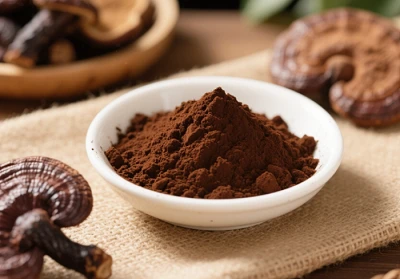
The herbal supplement market continues evolving in 2026, creating new opportunities for slippery elm bark powder suppliers and supplement manufacturers. In this blog post, we will provide a detailed overview of digestive health trends, private label growth opportunities, and procurement considerations.
Market Overview of Bulk Slippery Elm Bark Powder in 2026
The global herbal medicine market is on an aggressive growth trajectory. Recent data projects the sector to reach over $417 billion by 2033. Slippery elm bark powder, in particular, has attracted significant attention from numerous supplement brands.
Slippery elm comes from the inner bark of Ulmus rubra, a tree native to North America. Supplement manufacturers commonly use the bark in digestive wellness products, herbal blends, and throat support formulas.
Multiple factors continue to drive market growth. Consumers are increasingly favoring natural health products. Demand for traditional herbal ingredients is also growing in North America, Europe, and parts of Asia. Consequently, more and more supplement companies are sourcing bulk slippery elm bark powder for new product development.
Experts predict that the market will maintain steady growth in the coming years, particularly in the areas of digestive health and functional nutrition.

Digestive Wellness Trends Supporting Slippery Elm Bark Powder Demand
Digestive wellness remains one of the largest segments in the supplement industry. Consumers pay closer attention to gut health.
Some recent studies highlight its role in managing intestinal barrier dysfunction, commonly known as "leaky gut".
Modern lifestyles, marked by high stress and processed foods, have made GI support a top priority for 70% of supplement buyers. Slippery elm contains mucilage that creates a protective film over inflamed tissues. Ingredients rich in dietary fiber continue to be popular in the health market. Slippery elm bark, with its natural soothing properties, is particularly well-suited for this category.
Rising Consumer Interest in Traditional Herbal Ingredients
Modern consumers are increasingly valuing traditional herbal remedies. Many now prefer ingredients with a long history of use in herbal health. Slippery elm has been used for centuries by Indigenous North Americans and in traditional Unani medicine. This historical context enhances its appeal in today's natural products market and makes it easier to win consumer trust.
Furthermore, social media influencers and health experts have contributed to increased awareness of herbal ingredients. Educational content about traditional plants continues to attract young, health-conscious consumers.
Why Supplement Brands Are Adding Slippery Elm Bark Powder to Product Lines?
Slippery elm bark powder offers numerous advantages for product developers, including:
First, it can be used in a variety of functional formulations. Brands can position slippery elm bark powder in digestive health, throat care, and general health blends, such as those found in throat lozenges.
Second, slippery elm bark powder pairs well with many complementary ingredients. For example, it can be combined with marshmallow root powder, licorice root powder, probiotics, and herbal fiber.
Third, consumers recognize slippery elm bark powder as a natural ingredient. This recognition helps brands build market trust and strengthen product positioning.
As competition intensifies in the health supplement market, brands are constantly seeking unique herbal ingredients with strong consumer appeal. These advantages maximize the return on investment for supplement brand product development.

How Private Label Brands Are Expanding Herbal Product Portfolios?
Driven by growing consumer demand for natural health supplements, many private label companies are focusing on herbal products. Slippery elm bark powder has become a popular choice due to its versatility and high market acceptance.
Bulk herbal ingredients can be more effectively used in capsules, powders, teas, and blends, enjoying broad market acceptance.
Meanwhile, subscription-based health plans and online health supplement stores are also contributing to market expansion. Many smaller brands are now leveraging digital marketing and niche positioning to capture a larger share of the market.
Bulk Slippery Elm Bark Powder Applications
Slippery elm bark powder can be used in various dietary supplement forms. Capsules remain one of the most popular choices due to their convenience and precise dosage.
- Powdered blends, herbal beverages, and herbal teas are also gaining popularity.
- Functional blends are another rapidly growing category. Many companies combine slippery elm bark with probiotics, prebiotics, digestive enzymes, and plant extracts.
- Some brands also use slippery elm bark in throat lozenges and throat health products.
Therefore, it can be easily incorporated into different formulations without facing significant processing challenges.
Challenges in Sourcing Sustainable Slippery Elm Bark Ingredients
Despite continued growth in market demand, the sourcing of slippery elm bark still faces numerous challenges. Sustainability remains one of the most pressing concerns in the industry. Overharvesting could harm slippery elm populations if suppliers do not adhere to responsible harvesting practices.
Regulatory requirements and environmental awareness are also increasing. Many dietary supplement brands now require the use of traceable and ethically sourced raw materials.
How to Choose a Reliable Bulk Slippery Elm Bark Powder Supplier?
When selecting a supplier, look beyond the price tag. A reliable partner should provide:
First, you should assess the supplier's industry experience. Experienced manufacturers typically offer more comprehensive quality control and technical support.
Second, request relevant documentation. Reliable suppliers will provide Certificates of Account (COAs), microbiological testing reports, heavy metal testing reports, and production flow charts, among other things.
Third, review the supplier's sourcing and sustainability practices to ensure a long-term supply.
Finally, look for suppliers with responsive communication and strong customer service. Rapid support can quickly resolve your issues.
Undersun Bulk Slippery Elm Bark Powder Specifications Sheet
|
Product Characteristic |
||
|
Product name |
Slippery Elm Bark Powder |
|
|
Product specification |
Fine Powder |
|
|
Manufacturing process |
Processed through procedures including picking, rinsing, drying, pulverization, sieving, homogenization, metal detection and packaging |
|
|
Raw material and part |
Dried inner bark of Slippery Elm |
|
|
Biological latin name |
Ulmus rubra Muhl. |
|
|
Unit size |
25kg/carton |
|
|
Shelf life |
36 months |
|
|
Storage conditions |
Sealed, store in a cool and dry place |
|
|
Sensory Indexes |
||
|
Colour |
Weak yellowish orange |
|
|
Characteristics |
Powder, no visible impurities |
|
|
Taste & Odour |
Characteristic taste & odour, no unpleasant odour |
|
|
Identification |
||
|
Items |
Inedx |
According to |
|
Microscopic identification |
Consist with characteristic |
USP Monograph: "Slippery Elm" |
|
Auxiliary materials identification |
No additives |
USP-NF 2023 <1064> & <201> |
|
Chemical Analysis |
||||||||
|
Item |
Inedx |
According to |
||||||
|
Particle size |
NLT 50% through 80 mesh; NMT 50% through 120 mesh |
USP-NF 2023 <786> |
||||||
|
Moisture % |
≤12.0 |
USP-NF 2023 <731> |
||||||
|
Ash % |
≤10.0 |
USP-NF 2023 <561> |
||||||
|
Heavy Metals |
||||||||
|
Items |
Index |
According to |
||||||
|
Arsenic(As) mg/kg |
≤1.5 |
USP-NF 2023 <2232> |
||||||
|
Cadmium(Cd) mg/kg |
≤0.5 |
USP-NF 2023 <2232> |
||||||
|
Mercury(Hg) mg/kg |
≤0.2 |
USP-NF 2023 <2232> |
||||||
|
Lead(Pb) mg/kg |
≤1.0 |
USP-NF 2023 <2232> |
||||||
|
||||||||
|
Microorganism |
||||||||
|
Item |
Inedx |
According to |
||||||
|
Aerobic plate count CFU/g |
≤100000 |
USP-NF 2023 <2021>&<2022> |
||||||
|
Mould and Yeast CFU/g |
≤1000 |
USP-NF 2023 <2021>&<2022> |
||||||
|
E.coli /10g |
Negative |
USP-NF 2023 <2021>&<2022> |
||||||
|
Salmonella /10g |
Negative |
USP-NF 2023 <2021>&<2022> |
||||||
At Undersun, we provide high-quality bulk slippery elm bark powder to health supplement manufacturers and raw material distributors worldwide. We are focused on providing consistent quality, professional service, and reliable global supply solutions for herbal health supplement applications. Contact us now!
FAQ
1. What Are the Possible Side Effects of Slippery Elm Bark Powder?
Slippery elm bark powder is generally well tolerated when used appropriately. Some people may experience mild digestive discomfort or allergic reactions.
2. What Vitamins Are Found in Slippery Elm Bark Powder?
Slippery elm bark powder contains small amounts of nutrients such as calcium, magnesium, phosphorus, and potassium, as well as Vitamin C and various B vitamins. However, its primary value lies in its mucilage content, rather than its vitamin content.
3. What Micro Ingredients Are Found in Organic Slippery Elm Bark Powder?
Organic slippery elm bark powder naturally contains plant compounds such as mucilage, tannins, calcium, magnesium, potassium, zinc, and antioxidant-related phytonutrients.
4. Can Slippery Elm Bark Powder Be Made into a Tea?
Yes. Many people mix slippery elm bark powder with warm water to create a tea-like beverage. Thanks to its rich mucilage content, the resulting drink has a smooth texture and offers soothing properties.
5. How Long Is Slippery Elm Bark Powder Good For?
Most slippery elm bark powder products remain stable for about 18 to 24 months when stored properly.
Reference
Upton, Roy, ed. American Herbal Pharmacopoeia: Slippery Elm Bark Monograph. American Herbal Pharmacopoeia, 2010.
MDPI. (2023). Influences of yogurt with functional ingredients from various sources that help treat leaky gut on intestinal barrier dysfunction in Caco-2 cells. Pharmaceuticals, 16(11), 1511.
MDPI. (2024). Changes in digestive health, satiety and overall well-being after 14 days of a multi-functional GI primer supplement. Nutrients, 16(18), 3173.
MDPI. (2025). European consumer and regulatory trends in medicinal plant food supplements and their functional properties: The road from farm to fork. Applied Sciences, 15(21), 11605.
XIA & HE Publishing. (2025). Herbal approaches to gastrointestinal disorders: Integrating tradition and science. Journal of Traditional and Gastronomic Medicine.